
Understand what you bring to closing
The Closing Table.
Understand your monthly payment, closing costs, prepaids,
and the funds that start your escrow account.
A little familiarity. A lot more confidence.
Your Closing Disclosure, explained.
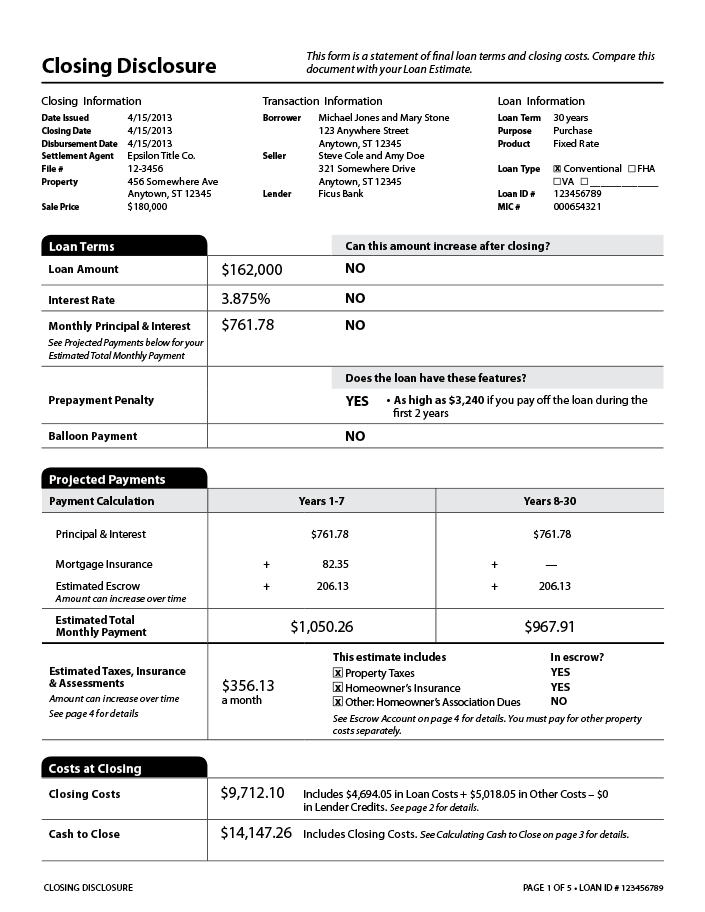
The numbers become clearer when you can see where they live. Explore the first two pages of a sample Closing Disclosure—tap a section to understand what it means and what to look for in your own.
Official CFPB educational example from 2013. Historical figures, rate, and loan features—not a Miramar quote or current pricing. Your Closing Disclosure has five pages; review them all.
Behind the Payment.
One payment can do several jobs. Understand the pieces and how they fit into your household budget.
Principal & interest
Principal repays the amount you borrowed. Interest is the cost of borrowing. Together they form the loan portion of your payment.
Property taxes & homeowners insurance
When escrowed, part of each payment is set aside for these bills. Without escrow, you pay them separately. Either way, include them in your housing budget.
Mortgage insurance
If your loan requires it, a monthly mortgage insurance charge may be included. This is separate from homeowners insurance.
What may sit outside the payment?
HOA dues are usually paid separately. Utilities, maintenance, and repairs also belong in your household budget.
What are lender fees?
Charges for originating your mortgage. You may see processing, underwriting, or origination fees in Section A of your Loan Estimate and Closing Disclosure.
Understand what each charge covers
Ask which service a fee pays for. Appraisal, title, and government recording costs are separate transaction expenses, even when your lender helps arrange them.
Points & lender credits
Discount points pay more upfront for a lower interest rate. One point is 1% of the loan amount, not a one-percentage-point rate reduction. Lender credits can reduce upfront costs, often in exchange for a higher rate. Compare the rate and costs together.
Services behind the loan.
Appraisal, credit, flood, and tax services are separate from fees for originating your mortgage. Even when the lender arranges them, they may be provided by third parties.
Understand what each charge covers
Ask which service a fee pays for and who provided it. Read across the row to see who pays and whether it was already paid before closing.
Why is this separate from Section C?
Section B lists required services for which you did not select the provider. Section C lists services for which you selected a provider. Title and settlement charges should be read in the section where they appear on your own disclosure.
What are title fees?
Title work helps establish ownership and identify existing claims. Settlement services coordinate the closing. Insurance policies address covered title risks after the purchase.
Title search & settlement services
These can include examining ownership records and coordinating documents and funds. Your itemized statement shows the services and who pays for them.
Lender’s policy vs. owner’s policy
A lender’s title insurance policy protects the lender’s interest. An owner’s policy protects your interest against covered ownership claims from before your purchase. They protect different parties; neither replaces homeowners insurance.
Charges and responsibility for payment depend on your transaction, contract, and state.
CFPB: Understanding title insuranceWhat are prepaids?
Expenses paid ahead of time. These are different from charges for arranging the loan.
Daily interest
Typically covers interest from closing through the end of that month. Your closing date affects the amount.
Insurance & taxes
The first year’s homeowners insurance is commonly paid upfront. Taxes and other prepaid items depend on the transaction and billing dates. Review Section F of your Closing Disclosure.
Start your escrow account.
Prepaids cover specific expenses. Your initial escrow deposit starts a balance for future property tax and insurance bills. It appears separately in Section G.
How is this different from prepaids?
Paying an insurance premium in Section F covers a specific policy period. Money deposited in Section G stays in the escrow account to help pay future bills. They serve different purposes, even when both involve insurance or taxes.
What happens after closing?
Your monthly escrow contribution helps replenish the account as bills are paid. Taxes and insurance can change over time. Explore how escrow changes in Own Well.
What you bring to closing.
Costs, credits, and cash.
Lender credits can reduce upfront costs, often in exchange for a higher rate. Compare the rate and costs together. Your down payment is separate from the closing-cost total.
After closing, Own Well.
Explore how your escrow account changes and plan for the years ahead.
Explore Own WellExplore your scenarioFind your question